

Adrian Woolfson’s Journey from Immunology Lab to Making Biology Computable with AI-Designed Genomes
Spotlight on
Adrian Woolfson
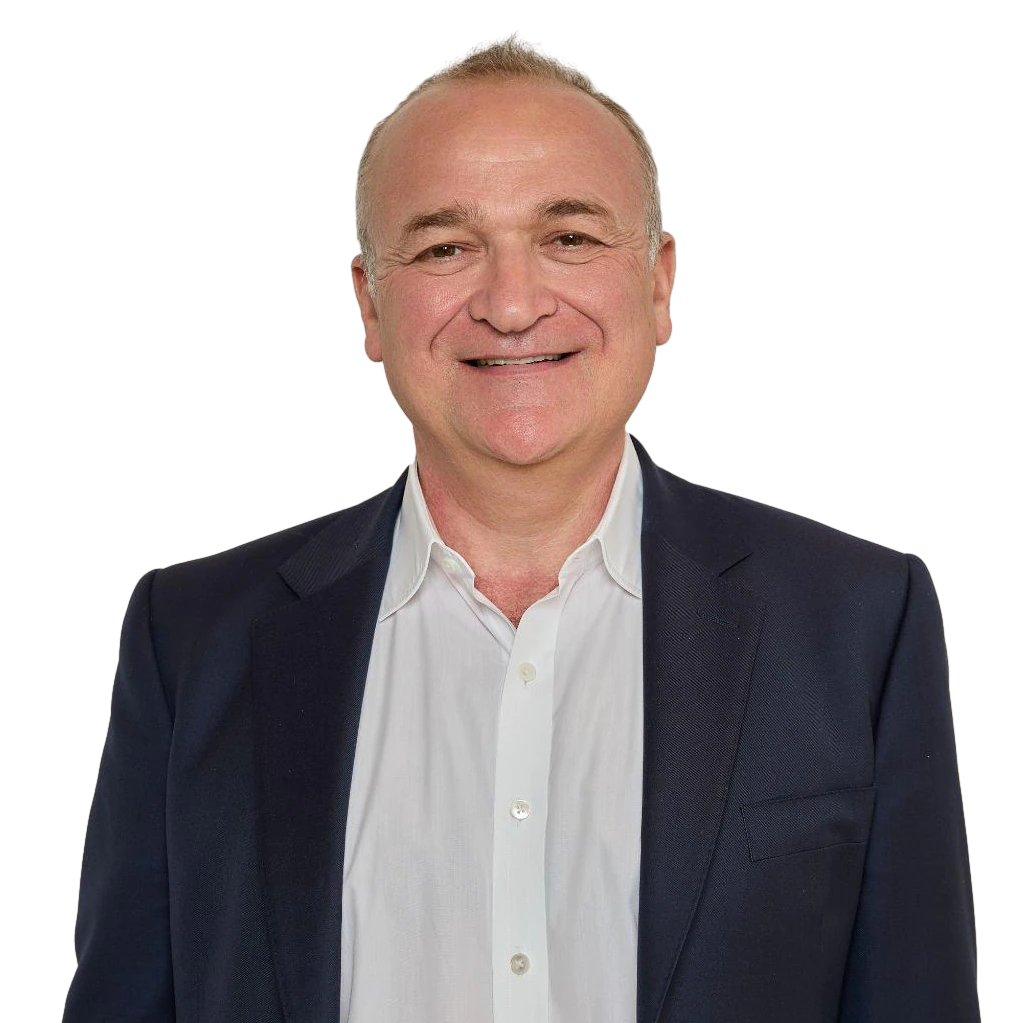
Who is Adrian Woolfson?
On a sunny summer morning, Katherine Novak, PhD candidate at Princeton University and ARTIS Fellow '25, chatted with Adrian Woolfson, co-founder of Genyro and co-founder of Replay, and author of three bestselling books (On the Future of Species: Authoring Life by Means of Artificial Biological Intelligence, Life Without Genes, and An Intelligent Person’s Guide to Genetics). We talked about all things careers, the future of his company, and the future of science and ABI. Adrian has amassed an impressive CV, having held myriad roles in academia and industry, and gaining valuable expertise on each occasion.


01
Experience and expertise
During his training years, not only did Adrian complete a medical degree, he also obtained a PhD in molecular immunology. His work was performed in the laboratory of inventor of monoclonal antibodies and Nobel Prize winner César Milstein, and he continued there for his postdoctoral work as a Junior Research Fellow. “I ended up working on top of a fridge,” remembers Adrian.
His drive and tenacity led him to meet people who inspired him in the lab, and to work with a team that set him up perfectly for his next steps. Adrian remembers his mentor, César, fondly, as he was a “brilliant guy” and a “deep thinker.” The lab at the time was very small, with just eight people in total, and César’s door was always open for hours of discussions and mentorship. After completing his medical residency, Adrian returned to the lab for four more years as a Wellcome Trust Fellow and as a Charles and Katherine Darwin Research Fellow.
In the lab, Adrian met a number of entrepreneurs, including Greg Winter (founder of Cambridge Antibody Technology, Domantis, and Bicycle Therapeutics) and David Secher (founder of Celtech). It was during this time that Adrian filed his first patent with Alan Fersht, whom he refers to as the ‘godfather of protein folding.’ This was one of Adrian’s first exposures to industry and biotech – a different world to the typical environment of an academic lab. He now holds numerous patents pertaining to topics that include: I-O therapy, synthetic DNA assembly, immune silencing, synthetic protein refolding machinery, and the barcoding of human diseases using machine learning and soluble immune proteins.
Following his postdoc and residency, Adrian was recruited to work on the UK launch of dasatinib, an oral tyrosine kinase inhibitor drug manufactured by Bristol-Myers Squibb that had just been approved for the treatment of chronic myeloid leukemia and acute lymphoblastic leukemia. Starting out in the London office, he was quickly promoted and transferred to the Company’s US headquarters in Princeton, New Jersey. “I never really thought about moving to America,” says Adrian, but the offer was very compelling. “They gave me three days to decide.” From medical affairs, he jumped into drug development and got involved in immunotherapy early on at the time that BMS acquired their anti-PD-1 inhibitor following the acquisition of Medarex. He then moved to Pfizer, working at their global headquarters in New York, where he managed the registrational study that led to the approval of Pfizer’s SMO inhibitor Daurismo. He was subsequently made Global Clinical Leader of Early and Late-Stage Immuno-Oncology/Hematology and built Pfizer’s immuno-oncology hematology franchise.
02
Follow what interests you
Adrian made his next move (involving a monthly commute to Basel, Switzerland and Rome, Italy from New York) as the Chief Medical Officer of Nouscom, working on a personalized cancer neoantigen vaccine for melanoma and a preventative vaccine for Lynch syndrome. Following that, he worked at Sangamo as Head of R&D and Executive VP, where he managed various gene and cell therapy programs. Adrian had already, by that point, come to the view that “gene therapy and genomic medicine was the future,” and this led seamlessly to the founding of his gene therapy company Replay and, subsequently, his genome writing company Genyro. He has, in addition, managed to keep his journalism career active, regularly writing Opinions for The Wall Street Journal and Science magazine, to name but a few.
We commented on the incredible range of abilities Adrian possesses and how this impacts his leadership, decision-making, and direction. The basic foundational principle, Adrian states, still applies: “You need to be suitably trained.” “When you’re pioneering something that is totally new, and where there is no precedent, audacity, vision, and ambition alone may be sufficient for success.” However, biopharma has a tried and tested foundational paradigm that remains relevant to this day. Adrian’s entrepreneurial spirit has been enabled and facilitated by his deep experience and has been critical in helping him to build the two companies he founded. Adrian’s path and career speak to the importance of obtaining a diversity of experience across multiple modalities. In his case, it has enabled him to acquire an incredibly diverse wealth of knowledge.
03
The future of Genyro
Regarding his current genome design and writing company Genyro, Adrian, together with Kaihang Wang at Caltech (genome writer) and Brian Hie at Stanford (genome designer) are working to achieve the next revolutionary breakthrough in medical science. Adrian sees the Sidewinder genome construction technology they have built, and the Evo2 genome language model devised by Brian Hie at the Arc Institute at Stanford, as being of equivalent importance to foundational platform technologies such as PCR or CRISPR. By keeping both technologies under the same roof at Genyro and having two of the most innovative genome editing and genome writing individuals in the world on the team, the ongoing synergy will allow the company to flourish and attain a leadership position in this important new area that has far-reaching implications for healthcare and beyond.
Licensing the Sidewinder technology will allow for the generation of early revenue and a corresponding reduced need for equity financing. Accompanying this, Adrian is also in the process of incorporating concept-focused subsidiary companies, which will be partially owned by, but separately managed from, the parent company. One of these subsidiaries is building synthetic neochromosomes to reprogram the genomes of plants to make them heat and drought resistant, for example. Another is focused on personalized poly-A RNA cancer vaccines.
The impact is already tangible. Recently, the team published two new high-impact papers to accompany their existing Nature paper. The first, detailing the parallel assembly of DNA from oligonucleotide pools in a single pot, dramatically increases the speed of DNA construction and dramatically brings down the cost. This method promises to be immensely important for enabling AI-generated designs to be realized in the physical world. The second paper describes the design and synthesis of multiple hantavirus poly-A RNA vaccine candidates within just 48 hours. In addition to their healthcare and AI-related applications, these technologies promise to have a significant impact on areas as diverse as DNA information archiving, biocomputing, bioenergy, and biomaterials.
04
Prediction for the future
Adrian’s vision for the future is vast. His prediction continues to be that “biology is set to become infrastructure,” much like steel did in the nineteenth century. “Eventually everything will be made biologically.” The good news there is that biology is sustainable and that by making, for example, food production more efficient, we will be able to prevent the destruction of the remaining wilderness and rainforests around the world. “The convergence of AI-informed genome design and Sidewinder-driven DNA construction is,” he predicts, “set to create a multi-trillion-dollar global economy.”
05
Biology must be computable
“The world divides into two types of individuals. Those who deny the computability of biological systems and those, like me, who believe that biology is essentially largely computable.” Of course, the information in biological systems extends well beyond genomes, and includes such things as epigenetics, development, learning, culture, microbiomes, and the environment. But Adrian emphasizes that “the bare-bones foundational structures of living things are computed from their genomes. It has to be that way,” he says, “otherwise there would be no order or predictability in biology.” Given the complexity of these combinatorial systems, Adrian emphasizes that the only way we’re going to comprehend them is by using AI, as “…the human mind is incapable of processing that extent of information.”
Humans intuitively overestimate the difficulty of such problems. It turns out that, like a ship in a bottle, most things in biology turn out to be quite simple when you are aware of the ‘tricks’ biology uses. “A lot of people still can’t get their head around the fact that biology can, in principle, be computable. With the dawn of powerful AI, we are now constructing the types of computing, structures, architectures, appropriate databases (of 3D and 4D genomes), and new ways of connecting databases hierarchically necessary to one day comprehend the language of biology.” “AI is going to play a critical role in this,” but we are currently in the “babbling phase” of acquiring biological language speaking competence. Brian Hie’s recent demonstration that viral genomes can be designed by AI from scratch, however, demonstrates the tractability of this problem. The journey has begun.
06
Finding the right problem to work on
A final lesson learned from Adrian relates to the multitude of scientific areas that one can spend time on, and the importance of making good decisions. “A key part of success in biology is identifying the right problem to work on. If you study something that is unlikely to be tractable within your lifetime, you may not be using your time optimally.”
Adrian is brimming with ideas and innovation, and has a clear vision of the future, which came across in our insightful conversation. We’ll have to wait and see what publications, books, and innovations Adrian comes out with next. Regarding Adrian’s writing, one great aspect of his latest book, On the Future of Species, is that it is approachable both to scientists and non-specialist readers alike, tackling difficult topics in a highly accessible manner. His next book, he tells me, will build on themes in his current book and explore the possibility space of life beyond natural evolution. Amongst other things, he plans to examine whether the concept of a species retains meaning “in a world where linear inheritance is no longer the only way that you can build life.” He is already in talks with publishers. Pushing scientific boundaries embodies the beauty and promise of science. The phrase “no longer the only way” becomes a chorus for a world filled with new possibilities and solutions for biological and non-biological problems alike, that will impact humankind in ways we can scarcely imagine.


