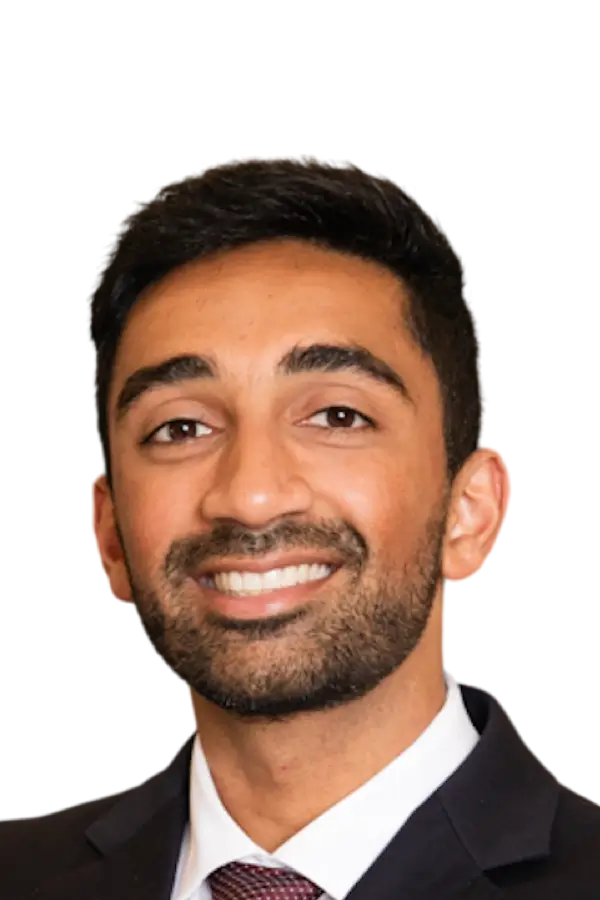
Siddharth Yarlagadda, MD, MBA
Harvard University


Sid is an internal medicine resident at Brigham and Women’s Hospital with interests spanning cardiology, clinical AI, and healthcare investing. He earned his MD from the Perelman School of Medicine and MBA in Healthcare Management from the Wharton School, where he was a Palmer Scholar and Healthcare Management President. Sid has worked across healthcare consulting, biotech company-building, and investing, with prior experience at ClearView Healthcare Partners, Roivant Sciences, and Commodore Capital. His research has focused on cardiovascular outcomes, health disparities, and AI-enabled clinical trial operations, including current work validating RECTIFIER, an AI-native platform for EMR abstraction and clinical trial screening. Sid is particularly interested in how therapeutics, diagnostics, AI, and care delivery innovation can improve cardiometabolic outcomes. Outside of medicine, he enjoys distance running, live sports, travel, and exploring new spicy food.
What is a healthcare advancement you hope to see in your lifetime?
Cardiometabolic medicine is entering an era of rapid therapeutic progress, but clinical research still depends heavily on slow, manual review of patient data to identify unmet needs and recruit for trials. I hope to see validated AI become a routine part of that infrastructure. If used reliably, AI could synthesize fragmented EMR data to reveal which patients are undertreated, which populations are underrepresented, where current therapies fall short, and who may be eligible for emerging interventions. That same capability could make trial recruitment faster and more precise, reducing a major bottleneck in therapeutic development. Over time, this would allow clinical data to inform more patient-centered trial design, more efficient R&D, and more tailored development of new drugs, diagnostics, and care models. The advancement I am most excited about is a learning system where real-world clinical needs are identified earlier, translated into better therapeutic development, and then implemented back at the bedside more quickly and equitably.
What excites you most about working with ARTIS?
What excites me most about ARTIS is the opportunity to learn at the exact intersection where I hope to build my career: clinical medicine, therapeutics, AI, and investing. Much of my prior industry experience has been through a therapeutics lens, from biotech company-building to public-stage diligence, while my current clinical research has focused more on AI-enabled clinical data abstraction and trial operations. ARTIS’s TechBio focus feels uniquely valuable because it spans both sides. I am excited to better understand how traditional therapeutic innovation and emerging healthcare technology can inform each other, especially in cardiometabolic medicine, where better drugs, better data, and better implementation will need to move together. I am also excited by the chance to work closely with the ARTIS team on diligence, market research, sourcing, and portfolio support while learning from fellows across the country. Expanding my network from Boston to the Bay Area and joining a community of clinically and scientifically trained peers would be an incredible way to broaden my perspective while continuing to grow as a physician-investor.
What is your greatest accomplishment?
I am most proud of continuing to build seriously in both clinical medicine and healthcare industry without letting either perspective flatten the other. Those worlds can sometimes feel culturally opposed: medicine is often centered on individual patients and service, while industry and investing are often judged by commercialization and financial outcomes. Moving between medical school, business school, private-sector roles, research, and now residency has pushed me to hold both truths together. I want to be patient-centered first, while also recognizing that therapeutics, technology, capital, and company-building can improve care at a scale that individual clinical encounters cannot. I am happy to have kept investing in both sides of that identity, even when it has required context-switching, humility, and explaining myself in rooms where one half of my path is less familiar. I also know this balance will require lifelong upkeep, but that is exactly the kind of career I hope to build.