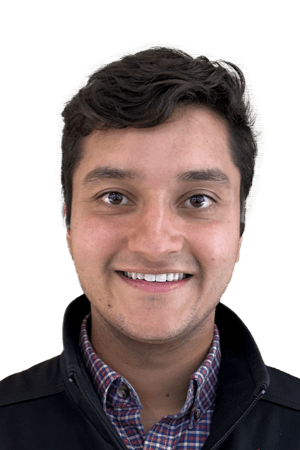
Raman Vilkhu
Senior Fellow


Raman is an electrical engineering PhD candidate at Stanford University, where he works with Professor E.J. Chichilnisky (Department of Neurosurgery and Ophthalmology) and Professor Subhasish Mitra (Department of Electrical Engineering) on the Stanford Artificial Retina project. His research centers on enabling efficient calibration of brain-computer interface (BCI) devices through the use of biophysical modeling and electrical simulations.
Raman currently holds a Stanford Bio-X Bowes fellowship and was previously awarded the Stanford Graduate Fellowship to fully support his PhD work. He graduated with a MS in electrical engineering from Stanford University ('21) and a BS in electrical and computer engineering from The Ohio State University ('18). During undergrad, he worked in Professor Asimina Kiourti's lab working on next-generation wearable electronic devices, including textile antenna based edge-sensing devices and flexible batteries.
In his free time, Raman is an avid player of most racket sports (pickleball, tennis, table tennis, etc.) and enjoys going on hikes around the Bay Area.
HEALTHCARE ADVANCEMENT YOU HOPE TO SEE IN YOUR LIFETIME
I hope to see BCIs become a real option for patients. For certain neurological disorders, I believe BCIs give us the best shot to mitigate patient suffering and I am excited to see the clinical trials progress towards making them a mainstream option for those seeking the care.
GREATEST ACCOMPLISHMENT
During my first few years at Stanford, I was a part of a science pen-pals program paired with a high school class in Spain. It was a fun opportunity to write letters to the students, sharing things about my research experiences and in return learning about their lives. Fast forward a few years, the teacher told me that one of the students had gotten into Stanford to pursue engineering, directly inspired by the letters the class had exchanged with me years ago! The entire experience made me realize how meaningful every interaction can be -- in this case a hobby I took on for fun, ended up being far more rewarding than I could have imagined!
WHAT EXCITES YOU ABOUT ARTIS
What excites me most is the team: in our interactions they've shown not only a deep understanding of TechBio, but also an interest in training the next generation of TechBio investors. I am really excited to work with them and find ways to best leverage my PhD training in the venture space!