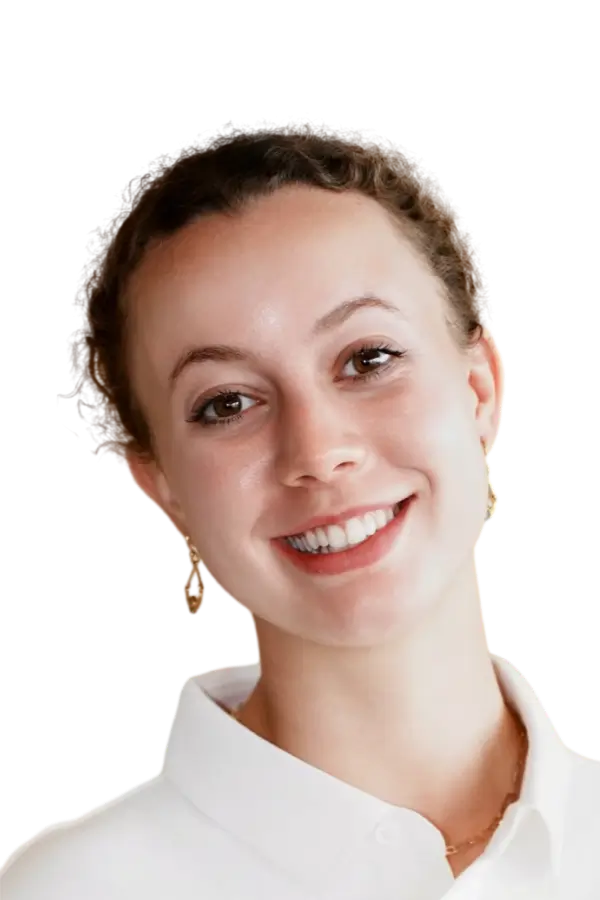
Kristine Pashin
University of Oxford / National Institutes of Health


Kristine Pashin is a Biomedical Sciences PhD student based jointly at the University of Oxford and the National Institutes of Health. She studies neurotransplantation and neural tissue engineering for Parkinson’s disease, combining stem-cell-derived neural models, regenerative biomaterials, and machine learning to guide neuronal differentiation and circuit repair. She graduated from Stanford University with bachelor’s and master’s degrees, where she conducted neuroengineering research in the Heilshorn Group, completed an interdisciplinary arts thesis on representations of pain across medicine, science, and visual culture, and co-founded an AI platform for life sciences patent drafting. Her work focuses on translating frontier science into tools, therapies, and institutions that improve human health.
What excites you most about working with ARTIS?
I’m most excited to learn how great science turns into a company that can make a difference in patient care. My PhD sits at the intersection of regenerative medicine, neuroengineering and AI, and ARTIS convenes the scientists, clinicians, founders and investors who know how to take discoveries all the way across that path. I’m especially excited to hone my judgment of which ideas are truly translatable, how to responsibly build around them, and how to keep patient need (not just tech novelty) at the center of company creation.
What is the most influential content you read last year?
One of the most impactful pieces I read this past year was David Brooks’s Atlantic essay, ""The People Who Will Thrive in the AI Age."" The distinction he made between using AI for optimization and cultivation stuck with me, especially the idea that as intelligence becomes abundant, volition becomes more valuable. Since I work at the intersection of AI and experimental science, I wish for AI to expand the scope of what I can investigate without outsourcing the intellectual struggle that forms judgment. The essay was a useful wake-up call and a standard for treating AI as a librarian, critic and collaborator rather than an oracle.
What is your greatest accomplishment?
In addition to my scientific work, I have a background in art history that shapes how I think about the body, illness, and the human experience of medicine. My proudest recent achievement has been the creation of The Shape of Suffering: Votive Intermediaries of Pain, an interdisciplinary exhibition and book that explores the representation of pain in art, medicine, science and ritual. The project pushed me to think as a scientist, writer and curator simultaneously, to track ideas across cultures and centuries, to procure works from major collections and to fashion them into an argument which could speak to scientific and humanistic audiences. It showed me that art & science do not offer competing accounts of the body, but complementary perspectives on illness, pain, and human experience. The exhibition is available at kristinepashin.art.