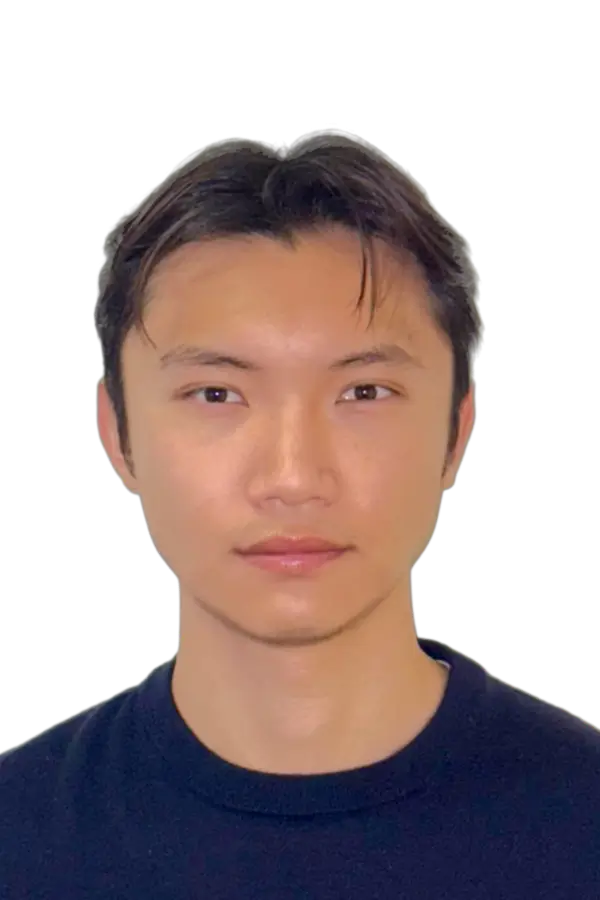
Joseph Kim
Johns Hopkins University


Joseph is an MD-PhD candidate at Johns Hopkins interested in medical AI and cell therapy. At Caltech, he double-majored in Computation and Neural Systems and in English, spending four years in a neuroscience lab analyzing neural data and building computer-vision tools to quantify emotional states in mice. At Genentech, he turned to cell states and generative biology, training transformer models for cell embeddings and developing methods for spatial transcriptomics. More recently, his work has focused on clinical AI and AI safety. Outside the lab, he writes, flies planes and studies wine.
What is a healthcare advancement you hope to see in your lifetime?
I hope to see a seismic shift in the type of “drugs” we administer. We seldom question the most commonplace standard-of-care drug type we use today: the small molecule. But its strengths of near-ubiquitous delivery and off-the-rack availability are also its limitations. I hope our arsenal of safe personalized precision medicine “drugs” advances so much that cures for diseases like psychiatric disorders and complicated cancers fall within reach — and that reaching for aspirin as a panacea ends up feeling medieval.
What excites you most about working with ARTIS?
I'm excited to join ARTIS at the forefront of TechBio innovation, enabling innovations to bloom and translations to real-world impact that otherwise may have not happened. I hope to further ARTIS’ work and learn from its strengths to apply it in my future work as a physician-scientist innovator.
What is the most influential content you read last year?
Science, the Endless Frontier, Vannevar Bush’s 1945 report to Roosevelt. It’s a foundational text that preceded the modern research engine, and in light of recent shifts, I read Bush’s brief. His assumptions and vision for how research should be performed are incredibly insightful even today to understand the current state of American science and my positionality within it.