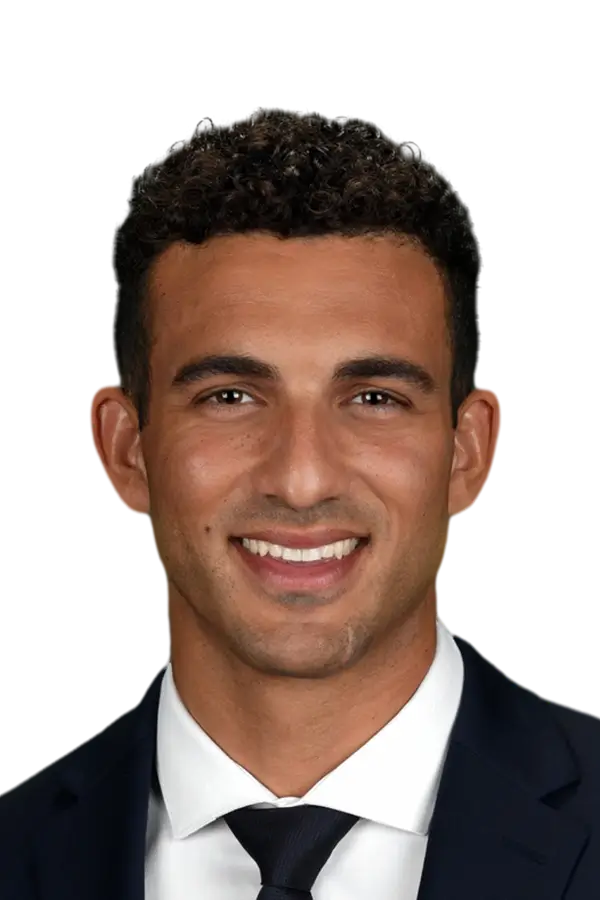
Harrison Konsker
Stanford University School of Medicine


Harrison is an MD candidate at Stanford School of Medicine, concentrating in AI and computational biomedicine with a focus on women’s health.
As a teenager, a clinical trial successfully treated a tumor in his hand, showing him how frontier science can redefine care. He carried that lesson into four years of CRISPR/Cas9 lung cancer research at Stanford and a year at the Weizmann Institute of Science.
In the HealthRex Lab with Jonathan H. Chen, MD, PhD, Harrison builds clinical AI tools from patient data. Among the projects in his broader portfolio are models that predict success at each stage of IVF and distinguish true UTIs from harmless bacterial findings to guide antibiotic use.
In medical education, he teaches national audiences how to turn general-purpose chatbots into personalized learning systems.
Outside the lab, Harrison co-founded Fillet for Friends, a food-security nonprofit that has delivered more than 120,000 meals
What is a healthcare advancement you hope to see in your lifetime?
A teenager arrives at a clinic with debilitating pelvic pain. Her tests reveal nothing definitive, so she leaves without an answer. The cycle repeats for 7-10 years until surgery finally gives her condition a name: endometriosis.
This is the story I hope becomes obsolete.
Her experience reflects a larger market failure. Women’s health and sexual and gender minority health remain underfunded because developing diagnostics and therapies has too often appeared economically unviable. I want noninvasive, data-driven tools to give patients answers in one visit, not after a decade.
AI and new clinical-trial models can change that math. By lowering the cost of bringing diagnostics and therapies to market, they can transform neglected conditions into investable opportunities. The advancement I hope to see is not one device or drug, but a healthcare economy in which no disease is ignored because solving it was deemed too expensive or its market too small.
What excites you most about working with ARTIS?
I have spent years in labs, but I have never seen how anyone decides what happens to a discovery after it leaves the bench. Whether it becomes a company, a pharmaceutical partnership, a hospital tool, or remains a paper is decided outside the lab, and I have never had a seat at that table.
That is why I want to learn how ARTIS thinks. I build clinical AI, while ARTIS evaluates companies built from it. I expect investors to ask questions I rarely hear in the lab: Who will adopt this? Who will pay for it? What evidence will change clinical behavior? Can it survive regulation and scale?
Learning to ask those questions earlier would change which problems I pursue, the endpoints I optimize, and the tools I choose to build. That perspective would change not only how I evaluate technology, but how I build it.
What is the most influential content you read last year?
The most influential paper I read last year was Bedi et al.’s JAMA systematic review of how large language models are tested in healthcare. I encountered it while reviewing studies comparing chatbots with physicians and expected the literature to show how well these models diagnose disease. Instead, the review found that only 5% of 519 studies used real patient-care data; the most common task was answering medical-knowledge questions.
That finding changed the first question I ask of clinical AI. High accuracy on a constructed case does not show that a model can help an actual patient. I now look first at where the data came from, whether the model was tested within a clinical workflow, and how it performs when information is incomplete or messy. The paper taught me to distinguish benchmark performance from bedside readiness, changing both how I evaluate clinical AI and how I build it.
From your perspective, what recent innovation has had the greatest impact in tech/health?
The most consequential recent innovation is not the chatbot interface, but the ability of large language models to interpret and reason over unstructured text.
As a medical student, I no longer wait for office hours to get unstuck. I use an adaptive tutor that explains a concept four different ways, simulates patients, and turns lectures into study guides, flashcards, and mnemonics.
In my research, the same capability turns clinical notes into analyzable data. For our UTI work, a model extracts symptoms alongside their supporting text across tens of thousands of cases. In IVF, it transforms reproductive endocrinology records into modeling-ready datasets. Work that could require years of manual chart review becomes a reproducible pipeline.
Large language models have changed both how I learn medicine and what clinical records can reveal at scale.
What is your greatest accomplishment?
My friend Maccabee and I started Fillet for Friends in eighth grade because we were catching more fish than our families could eat while food banks a few miles away needed protein. Today, it is a 501(c)(3) with four chapters that has donated more than 31,000 pounds of fresh fish and game meat, helping feed over 120,000 Floridians. But the numbers are not what make me proudest. Fillet for Friends kept growing through four years of college and into medical school because others took ownership, reshaped it, and made it theirs.