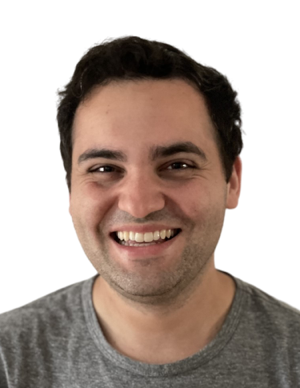
Grant Goldman
University of California, San Francisco (UCSF)


"Grant is a current 4th year PhD candidate in Bioinformatics at UCSF. As a member of the Vasilis Ntranos Lab at the UCSF Diabetes Center, he is interested in applying techniques from natural language processing to interpret protein-coding variation. His past work has demonstrated that protein language models are accurate and scalable predictors of mutation pathogenicity, and that different classes of mutations (i.e., substitutions versus deletions) can systematically differ in their effects, mediated by structural and sequence contexts.
Before UCSF, Grant spent two years as a research assistant developing techniques in population and statistical genetics, which inspired him to pursue a career in Bioinformatics. He holds undergraduate degrees in Applied Math and Economics from Brown University.
WHAT IS A HEALTHCARE ADVANCEMENT YOU HOPE TO SEE IN YOUR LIFETIME?
Approximately 90% of drug candidates fail clinical trials, increasing costs and reducing patient access. However, drug candidates supported by human genetic evidence are far more likely to succeed in trials, suggesting that genetics can play a crucial role in supporting new therapeutics. While genetics has already successfully informed therapeutic development for specific indications, I am excited for a future where genetics is readily integrated into all parts of the drug discovery and development process.
WHAT IS THE MOST INFLUENTIAL CONTENT YOU READ LAST YEAR?
I’m a huge reality TV fan, and Emily Nussbaum’s ""Cue the Sun"" was a fascinating look into the history of the genre and its impacts on culture, politics, and the broader entertainment industry.
FROM YOUR PERSPECTIVE, WHAT RECENT INNOVATION HAS HAD THE GREATEST IMPACT IN TECH/HEALTH?
AI models are highly data-intensive, and AI advances in biology were only made possible by training on massive amounts of publicly available, harmonized data. Thus, efforts to curate and aggregate vast amounts of biological data (and make this data publicly accessible) have an outsized impact on biotech and healthcare.