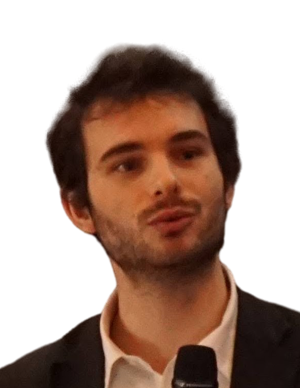
Felix Raimundo
UMass Chan Medical School


"Felix is a postdoctoral fellow in Professor Moore's group at UMass Chan Medical School. His research applies machine learning methods to understand DNA regulation.Felix completed his undergraduate studies in mathematics in France before earning an MSc in computer science from Telecom Paris. He then obtained his PhD in computational biology through a joint position between Mines Paris, Institut Curie and Google DeepMind.His doctoral research focused on evaluating AI methods for analyzing single-cell multiomics data in Triple Negative Breast Cancer. Following his PhD, Felix led the target discovery team at an immuno-oncology biotech startup before returning to academia.Felix's research interests lie at the intersection of wet and dry lab work. He aims to design experiments and datasets that are conducive to machine learning analysis, bridging the gap between experimental biology and computational methods.
WHAT IS A HEALTHCARE ADVANCEMENT YOU HOPE TO SEE IN YOUR LIFETIME?
The healthcare advancement I hope to witness in my lifetime is a comprehensive molecular understanding of neurological and psychiatric conditions. Our current limited knowledge in this area significantly hinders our ability to diagnose, classify, and effectively treat patients. This gap in understanding leads to a substantial burden on both patients and their families.A deeper molecular insight into these conditions would likely revolutionize our approach to mental health and neurological disorders. It could potentially lead to more precise diagnostics, personalized treatment strategies, and ultimately, better outcomes for those affected. This advancement would not only improve individual patient care but could also alleviate the broader societal and economic impacts of these conditions.
WHAT EXCITES YOU MOST ABOUT TECHBIO?
What excites me most about techbio is that it represents the natural evolution of biology as a field. Techbio, and computational biology as a whole, are attempting to understand the fundamental rules of biology by applying systematic reasoning to it.In my view, techbio is poised to be the Newtonian revolution of biology. While we were perfectly capable of building bridges before Newton formalized the laws of motion and gravity, his work allowed us not only to understand the forces involved in physics but also to leverage this knowledge to construct skyscrapers and launch rockets. Similarly, by applying computational methods and systematic analysis to biological systems, techbio might offer us the tools to predict, model, and eventually manipulate biological systems with unprecedented precision, potentially leading to transformative advancements in medicine, biotechnology, and our overall comprehension of living systems.
FROM YOUR PERSPECTIVE, WHAT RECENT INNOVATION HAS HAD THE GREATEST IMPACT IN TECH/HEALTH?
From a healthcare perspective in developed nations, the rapid development of mRNA-based COVID-19 vaccines stands out as a recent innovative breakthrough. This technology allowed for an unprecedented swift response to the pandemic, significantly reducing potential death tolls and economic damage by preventing the collapse of healthcare systems.However, I find the logistical innovations and persistent efforts in global disease eradication even more impressive. The successful eradication of smallpox, the near-elimination of polio, and the promising progress against malaria showcase humanity's ability to combat devastating diseases on a global scale. The impact of these achievements in terms of lives saved and suffering prevented is immeasurable and represents a monumental stride in public health.