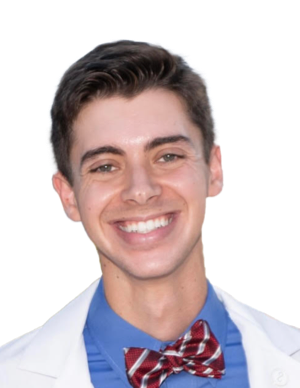
Ben Schwartz
MD/MBA Candidate, Biochemistry, Stanford


Ben is an MD/MBA candidate at Stanford University. Much of his research is in dermatology, which he believes is a field that uniquely blends the psychological and physiological elements of human wellness. He has largely focused on identifying and categorizing allergens in over-the-counter skincare products, the intersection of dermatology and rheumatology, and the skin toxicities of cancer immunotherapies. Ben has also worked in performance improvement at Lucile Packard Children's Hospital, where he spearheaded operational initiatives to optimize discharge processes.
Outside of dermatology, Ben is committed to LGBTQ+ health, and has led and served on multiple LGTBQ+ committees at the Stanford of Medicine. He also conducts research with the PRIDE Study, the world's first large-scale, long-term national health study of LGBTQ+ individuals.
Ben received his BA in religious studies and his BS in biology from Stanford University. In his free time, he derives immense fulfillment from storytelling and serves as one of the GSB's TALK Coaches. He also enjoys playing and watching tennis, and considers meeting Venus Williams one of his happiest moments. Finally, he is passionate about 90s pop music, and you'll often find him with one AirPod in, listening to Mariah Carey.
HEALTHCARE ADVANCEMENT YOU HOPE TO SEE IN YOUR LIFETIME
Personalized diagnostics and therapeutics for Alzheimer’s Disease that prevent and reverse cognitive decline. I believe the field is at the cusp of an inflection point and am optimistic that advances in multi-omics sequencing, cell therapies, and AI will yield a new generation of therapeutics that go beyond targeting hallmark proteinopathies.
WHAT EXCITES YOU ABOUT ARTIS
I’m excited to see TechBio companies building ventures around cutting-edge science and technologies I have never imagined. It’s incredibly inspiring to see ingenuity translated into ventures that can improve human health.
GREATEST IMPACT IN TECH/HEALTH
By combining generative AI and high-throughput single-cell -omics, researchers can now model cellular dynamics through space and time in disease, revealing new therapeutic targets. I expect this will yield a comprehensive "digital cell" atlas of health and disease for ubiquitous use, akin to the human genome. Advanced sequencing gives us letters; AI gives us grammar.